 Toll-Free:





What Is Generative AI and Why AI Can’t Replace Human Writers
Generative AI made all the waves back in 2022, and the world has not seemed the same since. In this blog, we’ll answer the question, “What is generative AI?”, how it’s impacted academia, and why it will never come close to human writing.
At its core, generative AI is a term that explains how artificial intelligence is used to generate content, whether text, images, video, or code, based on a prompt. An article by IBM states that generative AI relies on machine learning models that are able to simulate the human brain’s capability to make decisions.
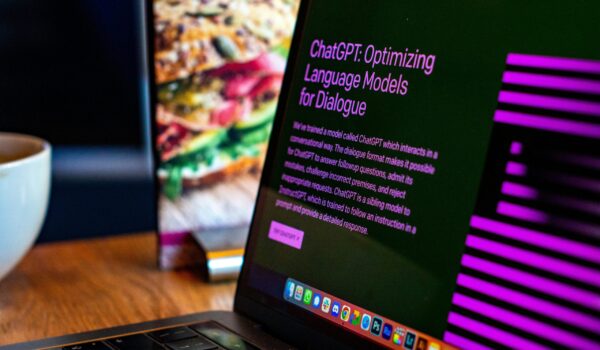
In 2022, generative AI or gen AI, became mainstream when Chat GPT was launched. It was one of the fastest platforms and applications of AI to be adopted. While Generative AI offers efficiency and a boost in productivity, it has also presented some very real challenges, especially in academia.
Academic writing requires the exercise of judgement. It shows a student’s capability to choose credible evidence, their skill in building defensible arguments, and their communication. AI writing tools might produce essays with speed, but it can’t be a reliable replacement for actual research and writing. Read ahead as we share all the reasons why human writers can never be replaced.

What Is Artificial Intelligence?
A computer science background isn’t necessary to understand what is generative AI. There are two core ideas you just have to understand: deep learning algorithms and Large Language Models.
Most of the AI writing tools that are available today rely on Large Language Models (LLMs). LLMs have been trained on a wide range and collection of books, articles, and even online text. When prompted, the LLM can predict the most likely sequence of words until a complete sentence or response is formed. That’s essentially how generative AI text is made.
That’s why whenever AI is used for content generation, it shouldn’t be taken at face value. AI-generated content may sound polished or even confident, but the model doesn’t quite equal human comprehension. LLMs don’t know the “facts”, oftentimes even hallucinating facts. It can’t evaluate, make arguments, nor does it understand academic integrity. The technology itself simply makes predictions.
According to an article published by the National Network of Libraries of Medicine, the limitation of generative AI is in its ability to only produce outputs based on statistical patterns and not human reasoning or intent.
 Generative AI’s Impact On Academia
Since AI writing tools and other generative AI tools became accessible to the public, academic workflows have changed tremendously. Students have been using AI writing tools, which have opened up discussions about ethicality.
What used to take hours of work before generative AI, can now be completed in minutes. But understanding how LLMs work and how they’ve been trained on already existing bodies of work can mean that AI-generated text submitted for academic purposes can be deemed as plagiarism.
Why Academic Institutions Are Concerned About AI Use
The concern of academic institutions when it comes to their students rampantly using AI is when human effort starts to dwindle. Like any technological advancement, it must be a tool that aids learning instead of something that replaces original thought.
When students become too reliant on artificial intelligence, their critical thinking skills are no longer being practiced. This means that the development of their argument-building and analysis skills can be stifled. When artificial intelligence starts doing the heavy lifting of assignments, essay writing, and other work, students bypass the actual learning process and get to just submit the assigned work.
Homework Help Global’s custom essay writing service has been a crutch for students over the past 14 years, even before generative AI was created. We understand that students sometimes feel stuck, overwhelmed, and need efficiency. But we also respect the foundations of academic integrity, having a team of expert writers who themselves have Master’s and Ph.D. degrees.
That’s why we continue to pioneer human-led support. At Homework Help Global, we don’t hallucinate facts like AI. Our sources are backed up with citations, and most of all, we keep human thinking at the center of our students’ academic journey.
 AI vs Human Writing: Which Performs Best?
AI writing is undoubtedly fast and efficient, but it’s not always accurate. “AI hallucinations’ happen when LLMs, as they continue a speech pattern, create nonsensical, nonexistent, and inaccurate outputs. On the other hand, a core foundation of academic writing that students must follow is finding reputable primary sources to cite – something generative AI clearly is unable to follow through consistently.
AI content generation may be leveraged in a few situations, but it is entirely unreliable and completely unethical to use in academic settings. AI can help students summarize their primary sources, AI can help break through writer’s block, and it can even create outlines. When AI is used in this ethical manner, it functions as it’s intended – a productivity aid.
AI vs human writing isn’t even a close comparison. After all, LLMs are modeled after human-made bodies of text. It merely copies and predicts patterns. In an article published under Medium titled “Why AI Cannot Replace Writers”, author Anushka Gopal explains that writing is more than just assembling words. It’s a culmination of interpretation, intention, and creativity that can only be shaped through human experience. AI inherently lacks the ability to cite from lived context, show emotional intelligence, and most of all, practice ethical responsibility.
 Why AI Can’t Replace Human Writers
Generative AI has rapidly advanced, but will it eventually replace human writers? We’re doubtful. Especially in academic and professional settings, entirely relying on AI is unrealistic. These are all the reasons why AI vs human writing isn’t even a comparison.
1. AI lacks genuine understanding and intent
When AI writing tools produce text, it rarely relies on comprehension but solely on probability. LLMs are only able to predict what essentially sounds correct based on patterns. When you put in a prompt, the LLM doesn’t necessarily “understand” in the way humans do. It just generates text, not necessarily haphazardly, but without “thinking”.
Human writers write with purpose. Only humans can persuade, analyze, and explain through writing, while AI only imitates the structure of language. Writing is an intentional act that only humans can do because of their ability to hold beliefs, form interpretations, and understand the consequences or impact of words.
2. AI cannot produce true originality
When AI generates content, it does so by rearranging the existing ideas that it has been trained on. It does not generate genuinely new insights or ideas. It combines patterns from training data, which automatically limits its ability to create new arguments, challenge assumptions, and contribute to original academic thought.
Only humans have the capability to draw from lived experience, discipline knowledge, and critical reasoning. These are qualities that deep learning algorithms (despite what it’s called) cannot replicate.
3. AI struggles with academic judgment and nuance
Successful academic writing requires students to exercise critical thinking and consistent judgment calls. This means choosing credible sources, weighing counterarguments, and adapting tone to the specific instructions of their professors or discipline. These skills and lessons are not something AI can reliably do because they inherently lack contextual knowledge.
AI writing can produce essays that may sound polished. But when it comes to executing according to the assignment instructions, it misses the mark.
4. AI cannot take responsibility or accountability
The goal of academic work is less about the final product. It teaches students accountability. For every claim, citation, and conclusion, the assignment becomes a student’s responsibility. AI cannot defend an argument, explain reasoning during feedback, or even correct itself when it makes mistakes.
In understanding what is generative AI, always remember that it operates through statistical modeling, not reasoning or accountability.
5. AI cannot replace human mentorship and learning
Academic writing is more than just a deliverable. It is a valuable learning process that is passed from mentors, teachers, and real writers to students. They provide feedback on how to improve future work and how to think clearly over time.
This is why over the past 14 years, Homework Help Global has been a consistent hub for students looking for guidance. Our team consists of human experts who provide guidance, feedback, and steer students toward academic growth. Our commitment to students is something no automated system can offer.
 Frequently Asked Questions
1. What is generative AI in simple terms?
Generative AI is a subset of artificial intelligence that creates content such as text, images, and code based on how it’s prompted. Gen AI works by predicting patterns in data, but it does not understand in the way humans do.
2. Is generative AI the same as artificial intelligence?
No. Artificial intelligence is a broader field that includes many systems, such as prediction models, recommendation engines, deep learning algorithms, and large language models. Generative AI is focused on creating content, designed to generate outputs based on training data.
3. Is using generative AI a form of plagiarism?
Using AI writing tools isn’t inherently wrong, but when it’s used to generate an assignment and the AI-generated content is submitted as it is, that’s when it becomes plagiarism. AI content generation does not cite sources reliably or show original reasoning. Many universities expect transparency and human authorship in graded work, but when students submit AI-generated work as their own, it goes against academic integrity.
4. Can professors detect AI-generated content?
Even without AI writing detectors, instructors can identify AI-generated writing through changes in their students’ tone. They can see through shallow analysis and inaccurate citations. The difference in AI vs human writing is very apparent because it shows in the weak arguments AI generates. Human-written work usually shows clear intent and a deeper engagement with the course material.
5. Will generative AI replace human writers in the future?
Writing is a moral and intellectual act that involves responsibility and judgment, a skill AI lacks. Experts widely agree that AI cannot replace human writers. Generative AI simply predicts language, but it can’t take ownership of ideas, defend claims, and learn ethically from mistakes as humans do.
 Expert Human Writing Trumps Generative AI In Every Way
Learning what is generative AI in the context of its use in the academic world means understanding its potential to change how students learn. AI writing tools can help produce content speedily, but it should not be a replacement for students to practice judgment, originality, and responsibility.
Now that we know how AI content generation relies on prediction and not understanding, we can deduce that the AI vs human is not even a fair competition. Does this mean students shouldn’t use generative AI? Not necessarily. Students must learn the balance between leveraging new technologies and practicing the fundamentals being taught in school. That includes the refinement of ideas, proper research, strengthening arguments, and upholding academic integrity.
At Homework Help Global, we continue to play a pivotal role in shaping students’ academic journey. Without compromising their learning experience, we provide guidance, editing assistance, coursework assistance, and even dissertation writing assistance that is 100% human.
In today’s technological and AI-driven landscape, trusting human-led support is still the safest and most effective way to succeed academically.