 Toll-Free:


White Paper vs Research Paper: Key Differences Every Student Should Know
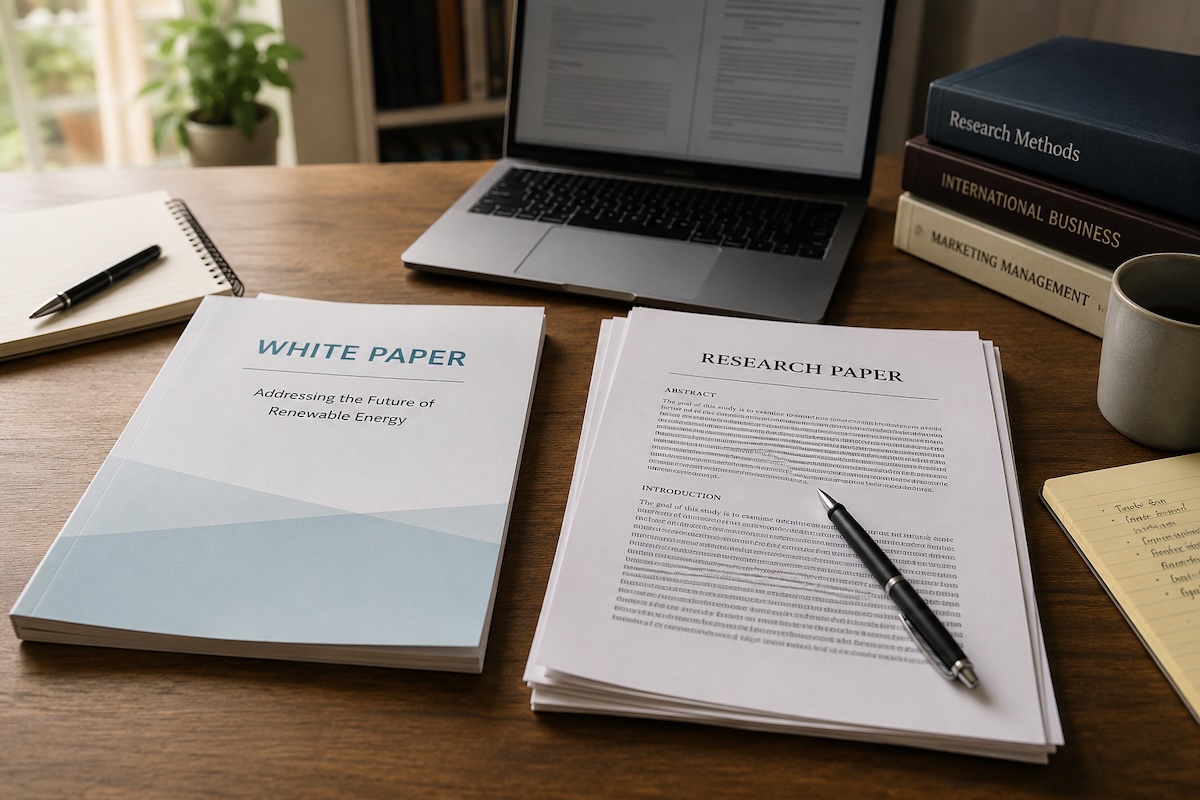
The difference in a white paper vs research paper comes down to intent: a white paper persuades a professional audience toward a decision, while a research paper presents objective findings that add to academic knowledge. Both look similar on the surface, running long, citing sources, and using section headings. Yet they serve different readers, follow different structures, and chase different goals. If you have written essays for years and suddenly face an assignment asking for a white paper, that gap matters. This guide explains what separates the two formats, when you will write each, and how to avoid the mistakes that cost students marks.
Key Takeaways
- Purpose splits them first. A white paper argues for a solution and guides a decision, while a research paper investigates a question and reports the evidence.
- Audience drives every other choice. White papers speak to managers, clients, and policymakers, while research papers speak to professors, peers, and scholars.
- Structure differs sharply. Research papers follow a fixed academic format, while white papers use a flexible problem-and-solution layout.
- Tone is not interchangeable. White papers persuade in plain language, and research papers stay neutral and formal.
- Both demand evidence, but a research paper documents every source for scrutiny, while a white paper cites selectively.
What Is a White Paper?
A white paper is an authoritative, in-depth report that explains a problem and argues for a specific solution. The term began as a label for official government reports in early twentieth-century Britain. As Purdue OWL notes, a white paper stands out in terms of purpose, audience, and organization. Today businesses, nonprofits, and government agencies use white papers to educate readers and move them toward a conclusion.
The format does two jobs at once: it teaches the reader about a complex issue, and it builds a persuasive case for a product, service, strategy, or policy. A typical white paper runs from 4 to 14 pages, far shorter than most formal studies, because it focuses on a few points rather than an exhaustive review. Writers usually sort white papers into three styles: the backgrounder, the numbered list, and the problem-and-solution paper.
Students meet white papers more often than they expect. Business, marketing, public administration, communications, and engineering courses all assign them, and capstone projects sometimes call for one as a professional deliverable.
What Is a Research Paper?
A research paper is a formal academic document that investigates a question and presents original findings or an evaluation of existing work. Its goal is to contribute to the body of knowledge in a field and, for students, to demonstrate mastery of a subject. The audience is scholarly: professors, classmates, researchers, and the experts who review work before a journal publishes it.
Research papers follow a recognized structure that many instructors call IMRaD. A paper opens with an abstract, then moves through an introduction, a literature review, a methodology section, results, a discussion, and a conclusion. A clear thesis statement anchors the argument, and primary and secondary sources support every claim. Peer review acts as the quality gate. For a full walkthrough, our guide on how to write a research paper covers each stage.
Most research papers fall into three types: argumentative, which defends a position; analytical, which examines a topic without taking sides; and expository, which explains a subject objectively. Lengths range from around 10 pages to well over 50, depending on scope and requirements.
White Paper vs Research Paper: The Core Differences
The fastest way to tell the two apart is to compare them across five dimensions. Use the PASTE framework: Purpose, Audience, Structure, Tone, and Evidence. The table summarizes the contrast, and the sections that follow explain each point.
| Dimension | White Paper | Research Paper |
| Purpose | Persuade and guide a decision | Investigate and add to knowledge |
| Audience | Managers, clients, policymakers | Professors, peers, scholars |
| Structure | Flexible problem-and-solution | Fixed academic format (IMRaD) |
| Tone | Persuasive and accessible | Neutral and formal |
| Evidence | Selective, supports the case | Comprehensive, open to scrutiny |
Purpose and Goal
Purpose is the clearest dividing line in any white paper vs research paper comparison. A white paper exists to influence a choice, so it narrows attention to the points that support a recommended solution. A research paper does the opposite, exploring a question fully and reporting findings honestly, whether or not the results match expectations.
Audience
A white paper speaks to a professional reader who wants a solution: an executive weighing a purchase, a client comparing vendors, or a policymaker assessing options. A research paper speaks to an academic reader who already understands the field, so the writer can use technical terms and assume prior knowledge.
Structure and Format
Research papers obey strict conventions. Instructors expect the IMRaD sequence, the abstract, and the reference list, and skipping a section weakens the paper. White papers allow more freedom, opening with the problem, building the case, and closing with the solution, often using charts and callouts. That flexibility cuts both ways, because fewer rules force more decisions onto the writer.
Tone and Language
A white paper uses clear, confident, persuasive language and avoids dense jargon so a general reader can follow along. A research paper stays objective and formal. It reports rather than sells, qualifies claims carefully, and lets the evidence carry the weight.
Evidence and Citations
Both formats rely on credible sources, yet they handle them differently. A research paper documents every source in a consistent citation style so other scholars can verify the work. Formatting rules, such as those in Purdue OWL’s APA guide, keep referencing uniform, and our explainer on what APA style is shows how it works in practice. A white paper cites selectively, choosing facts that strengthen its position.
When Should You Write Each One?
Start with one question: what is your goal, and who is reading? If your task is to demonstrate understanding, analyze a topic, or report findings for an academic audience, you are writing a research paper. Most disciplines assign these across undergraduate and graduate study, and our research paper writing service supports students at every stage.
If your task is to recommend a solution, persuade a stakeholder, or position an organization as an expert, you are writing a white paper. These appear in business, marketing, policy, and technology courses, and in professional settings after graduation. When the line feels blurry, run the assignment through the PASTE framework and let purpose and audience decide. Students who bring a draft to Homework Help Global often find that naming the audience first clears up most of their confusion about format.
Common Mistakes Students Make
The most frequent error mixes the tones. A research paper written in a salesy voice loses credibility, while a white paper written in a dry, exhaustive style buries the recommendation a reader needs. A second mistake forces the wrong structure, such as imposing rigid IMRaD onto a white paper that should flow from problem to solution.
Ignoring the audience causes the rest. A paper aimed at experts should not over-explain basics, and a white paper aimed at decision-makers should not read like a literature review. Citation habits trip students up too, because research papers require full referencing while white papers cite only what advances the argument. The team at Homework Help Global regularly helps students match format to purpose before drafting, which prevents costly rewrites. See the full range of support on our academic writing page.
Frequently Asked Questions
Is a white paper the same as a research paper?
No. In a white paper vs research paper comparison, the two share a serious tone and cited evidence, but they pursue different goals. A white paper persuades a professional audience toward a decision or a solution, while a research paper investigates a question and contributes objective findings to academic knowledge. Purpose and audience separate them far more than appearance does. Before choosing a format, identify who will read the document and what you want that reader to do, then let those answers guide your structure, tone, and citations.
Is a white paper academic or professional writing?
A white paper is professional writing rather than academic writing, even though students sometimes produce them for class. It targets business, policy, or technical readers and aims to inform a decision instead of adding to scholarship. Research papers, by contrast, are academic documents written for professors, peers, and scholarly publication. They follow stricter formatting and citation rules, demand a neutral tone, and undergo review before publication. A white paper can still be rigorous and well sourced, but its persuasive purpose places it firmly in the professional category.
How long is a white paper compared to a research paper?
When you compare a white paper vs research paper by length, the white paper usually runs from 4 to 14 pages, because it focuses on a few key points and a single recommendation. A research paper tends to be longer, often 10 pages or more and sometimes over 50, since it must cover methodology, a literature review, results, and full citations in greater depth. Length follows purpose here: a white paper stays lean to hold a busy reader, while a research paper expands to satisfy academic scrutiny.
Do white papers need citations like research papers?
Both use sources, but the standards differ. A research paper requires complete, consistent citations in a style such as APA or MLA so others can verify and build on the work. A white paper cites selectively, referencing the facts and statistics that support its argument, and it formats those sources more loosely. The goal of each citation also differs, since academic referencing invites scrutiny while white paper sourcing reinforces persuasion. When in doubt, follow the citation expectations your instructor or publication sets for the assignment.
Can a research paper be turned into a white paper?
Yes, with rework. You keep the credible findings, drop the exhaustive detail, and reframe the content around a problem and a recommended solution for a professional reader. The tone shifts from neutral reporting to clear persuasion, the structure loosens from IMRaD into a problem-and-solution flow, and the citations become selective rather than comprehensive. You may also add visuals and an executive summary. The core evidence stays the same, but the framing, emphasis, and design all change to serve a decision rather than scholarship.
Conclusion
At Homework Help Global, we work with students who feel stuck the moment an assignment swaps the familiar research paper for something new. Knowing the difference in a white paper vs research paper protects your grade and saves hours of guesswork, because once you fix your purpose and audience, the structure, tone, and citations fall into place. Whether you need a tightly argued white paper or a fully cited research paper, our academic writers can help you plan, draft, or polish it. Explore our research paper writing service or academic writing support, and request a quote to get started.
Share: