 Toll-Free:



Groceries on a Student Budget: 10 Ways to Save in Canada
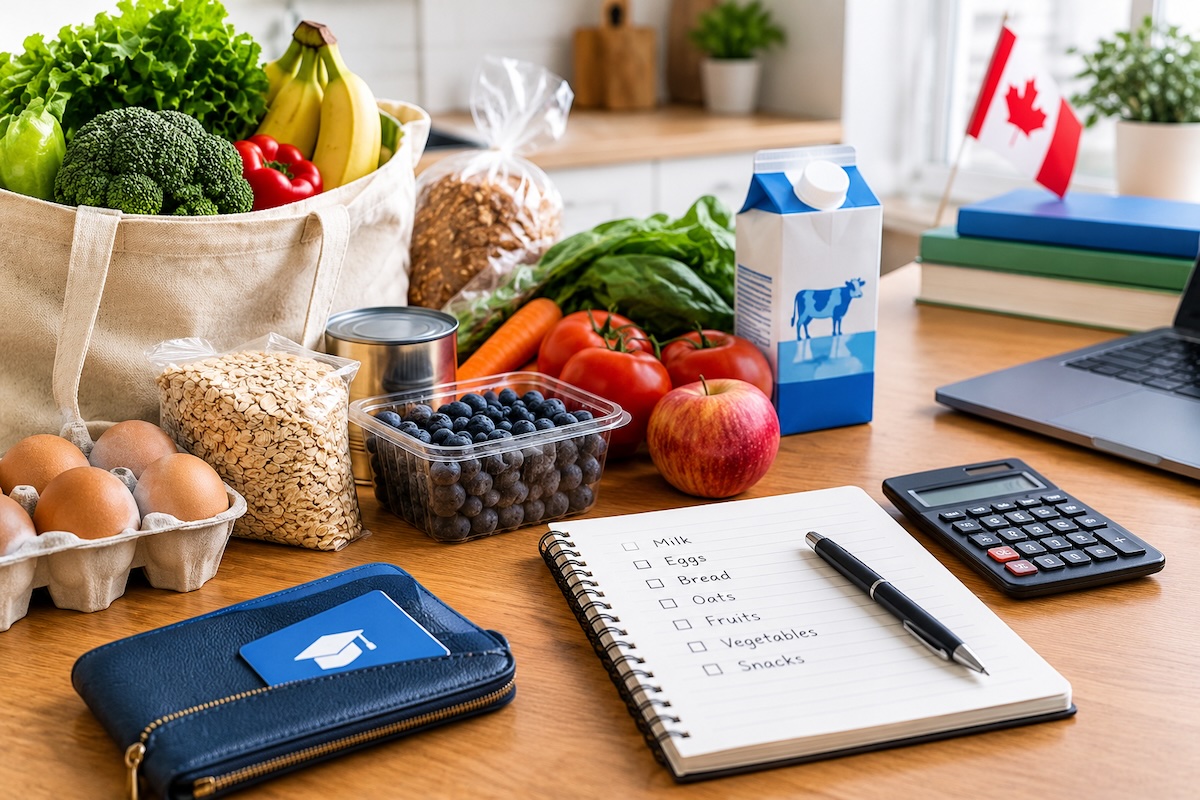
Quick answer: To buy groceries on a student budget, set a weekly spending limit, plan your meals and shop with a list. Compare flyers, use free loyalty programs like PC Optimum, Scene+ or moi, and shop at discount grocers. Buy store brands and budget staples like oats, rice, lentils, eggs and frozen vegetables, and use apps like Flashfood and Too Good To Go for marked-down food. Cooking in batches stretches your groceries even further.
When you’re getting ready for college or university, it’s easy to focus on classes, clubs and your new living space and forget about one important thing: what you’re going to eat. For many students, this is the first time they’ve been fully responsible for their own groceries.
Eating well on a tight budget is possible. Your body needs a mix of protein, carbohydrates, healthy fats, vitamins and minerals to keep you energized through lectures, study sessions and exams. With a little planning, you can get all of that without overspending. Here are 10 tips for buying groceries on a student budget in Canada.
1. Set a Grocery Budget
Before you shop, figure out how much you can afford to spend on food. Start by tracking all of your spending for a few weeks, not just groceries, so you can see where your money actually goes.
Then divide your expenses into two groups:
- Essentials: tuition, rent, groceries, transit, phone and toiletries.
- Extras: eating out, clothing, entertainment and other non-essentials.
Groceries belong in the essentials column. Once you know what’s left after your fixed costs, set a weekly grocery amount you can stick to. Checking it every week makes it much easier to stay on track than looking at the whole semester at once.
2. Plan Your Meals and Make a List
A grocery list is one of the simplest ways to save money. Plan your meals for the week first, then write down exactly what you need. Check your fridge and cupboards before you go, so you don’t buy what you already have.
Organize your list by section of the store, such as produce, dairy, meat and alternatives, and pantry items. You’ll shop faster and be less tempted by impulse buys. If you’re new to grocery shopping, a detailed list also helps you estimate your total before you get to the checkout.
3. Grab a Basket, Not a Cart
Big shopping carts make it easy to overbuy. In fact, many stores use oversized carts as a sales tactic, since people are inclined to fill whatever space they have.
If you’re shopping for one, a basket naturally limits how much you can buy. That matters, because fresh food spoils, and throwing it out is the same as throwing away money. Buying what you’ll actually use in the next week or two is almost always cheaper in the long run.
4. Buy Food That Makes You Feel Good
Eating on a student budget doesn’t have to mean living on instant noodles. The food you eat affects your energy, focus and mood, so it’s worth making healthy choices a habit. You should have a well-balanced diet that powers your body, mind, and soul in a positive way.
Canada’s Food Guide offers an easy way to build meals: fill half your plate with vegetables and fruits, a quarter with protein foods, and a quarter with whole grains, and make water your drink of choice. Your exact needs depend on your body, activity level, diet and culture, but this plate is a good starting point for every meal.
Filling, nutritious foods like whole grains, beans and lentils also keep you full longer than heavily processed snacks, so you’re less likely to spend extra money on food between meals.
5. Use Flyers, Coupons and Loyalty Programs
A few minutes of planning can save you a lot at the checkout.
- Check the flyers. Apps like Flipp collect weekly grocery flyers in one place, so you can see what’s on sale near you and plan your meals around it.
- Join free loyalty programs. Canada’s big grocery chains all have one. PC Optimum works at Loblaw-owned stores such as No Frills, Loblaws, Real Canadian Superstore and Shoppers Drug Mart. Scene+ works at Sobeys-owned stores such as Sobeys, Safeway, FreshCo and Foodland. Moi works at Metro and Food Basics. These apps often load personalized offers based on what you buy.
- Look for student discounts. Some stores have offered student discount days, such as 10% off at Bulk Barn on Wednesdays or at Zehrs on Tuesdays with a valid student ID. Offers change, so ask at your local store. A Student Price Card (SPC) also gives you discounts at hundreds of Canadian retailers for $10 a year.
6. Shop Discount Grocers and Choose Store Brands
Where you shop makes a big difference. Discount grocers such as No Frills, FreshCo, Food Basics, Real Canadian Superstore and Walmart are usually cheaper than full-service supermarkets for the same basics.
Store brands are another easy win. Brands like No Name, Compliments and Great Value are often much cheaper than name brands and just as good for staples like pasta, canned goods, rice and frozen vegetables. Bulk bins are useful too, since you can buy just the amount of spices, grains or snacks you need.
7. Buy Marked-Down and Surplus Food
Food that’s close to its best-before date is often still perfectly good, and much cheaper.
- Flashfood sells discounted items, including produce, meat, dairy and prepared foods, at up to 50% off. It’s available at more than 900 Loblaw-owned stores across Canada, including No Frills, Real Canadian Superstore, Loblaws and Zehrs (Retail Insider). You pay in the app and pick up your order in store.
- Too Good To Go lets you buy “Surprise Bags” of unsold food from local bakeries, cafés, restaurants and grocery stores at a discount, in cities across Canada.
- In-store markdowns are worth checking too. Look for reduced stickers on bakery items, meat and produce, especially later in the day.
8. Stock Up on Budget-Friendly Staples
Some foods give you a lot of nutrition for very little money. Keep these on your list:
- Grains: oats, rice, pasta and whole-grain bread
- Proteins: eggs, dried or canned lentils, chickpeas and beans, canned tuna or salmon, peanut butter and tofu
- Produce: bananas, apples, carrots, cabbage, onions and potatoes, which are usually affordable year-round
- Frozen fruit and vegetables: just as nutritious as fresh, and they won’t spoil before you use them
- Dairy and alternatives: plain yogurt, milk or fortified plant-based drinks, and cheese bought in blocks instead of pre-shredded
These staples are the building blocks of cheap, filling meals like stir-fries, chili, pasta dishes, curries and overnight oats.
9. Cook in Batches and Use Your Leftovers
Cooking at home is far cheaper than eating out, and batch cooking makes it easier during a busy week. Make a big pot of soup, chili or pasta sauce on the weekend, then portion it out for lunches and dinners. Freeze extra portions for exam season, when you won’t have time to cook.
Get creative with leftovers, too. Last night’s roasted vegetables can go into a wrap, and leftover rice makes a quick fried rice. If you share a kitchen with roommates, splitting the cost of staples like oil, spices and condiments saves everyone money.
10. Know Where to Find Support
If money gets tight, you’re not alone, and there’s no shame in asking for help. Most Canadian colleges and universities run a campus food bank or food pantry for students, and many offer emergency bursaries or grants through their financial aid office. Your local community food bank can also help.
Frequently Asked Questions
How much should a student spend on groceries?
It depends on your city, your diet and whether you have a meal plan. The best approach is to track your spending for a month, set a realistic weekly amount, and adjust from there.
What are the cheapest healthy foods to buy in Canada?
Oats, rice, pasta, eggs, lentils, beans, frozen vegetables, bananas, carrots, cabbage, potatoes and canned fish are some of the most affordable nutritious foods. Buying store brands makes them even cheaper.
What is the cheapest grocery store in Canada for students?
Discount grocers like No Frills, FreshCo, Food Basics, Real Canadian Superstore and Walmart are usually the most affordable. Prices vary by location, so compare flyers for the stores near you.
Are apps like Flashfood and Too Good To Go worth it?
Yes, if you’re flexible. Flashfood offers discounts of up to 50% on items close to their best-before date, and Too Good To Go sells surplus food at a discount. Both are great for stretching your budget.
How can I eat healthy on a student budget?
Plan your meals, build your plate around vegetables, whole grains and affordable proteins like eggs and lentils, buy frozen produce, and cook at home in batches.
Make Healthy Eating a Habit
Learning how to buy groceries and eat well on a budget is a skill you’ll use for the rest of your life. Plan ahead, shop smart and don’t be afraid to treat yourself to the occasional sweet in moderation. Your body and your bank account will thank you.